Kalshi pays a small streamer over $100K to play GTA 6
Kalshi hired Cliff Savage, a streamer who averaged 30 viewers per stream, to beat GTA 6 live for over $100K. Here is what the company actually bought, why this particular money is off the table for creators in Brazil, and which parts of the format you can take to a brand there.
Kalshi pays a small streamer over $100K to play GTA 6
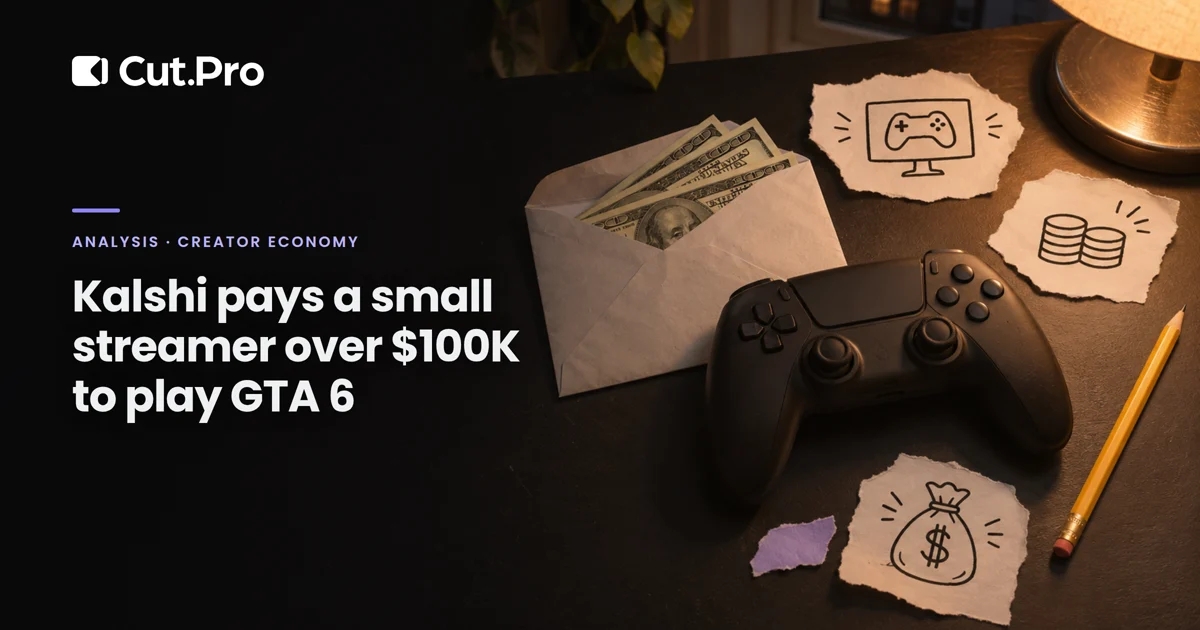
Kalshi, an American prediction market platform (a site where people buy and sell "yes" or "no" contracts on what will happen), hired streamer Cliff Savage to play GTA 6 from start to finish, live, for over $100K. Savage averaged about 30 viewers per stream. The company did not buy an audience: it bought a story. And for creators in Brazil, this particular company's money is the least interesting part, because Kalshi is blocked there.
What you can use is the shape of the contract. And it says a lot about how a brand sees a small streamer in GTA 6 week.
Who is the streamer and how much will he make?
Cliff Savage is 36 and lives in Corona, California, according to Exame. He had streamed every day for 685 days when he was picked, according to Kalshi's announcement post on X from November 18. Before Twitch, he was a musician on SoundCloud and averaged 30 viewers per stream, in the words of Kalshi CEO Tarek Mansour, as reported by Covers. Yahoo Finance counted a little over 2,000 followers on Twitch and almost 16,000 monthly listeners on Spotify.
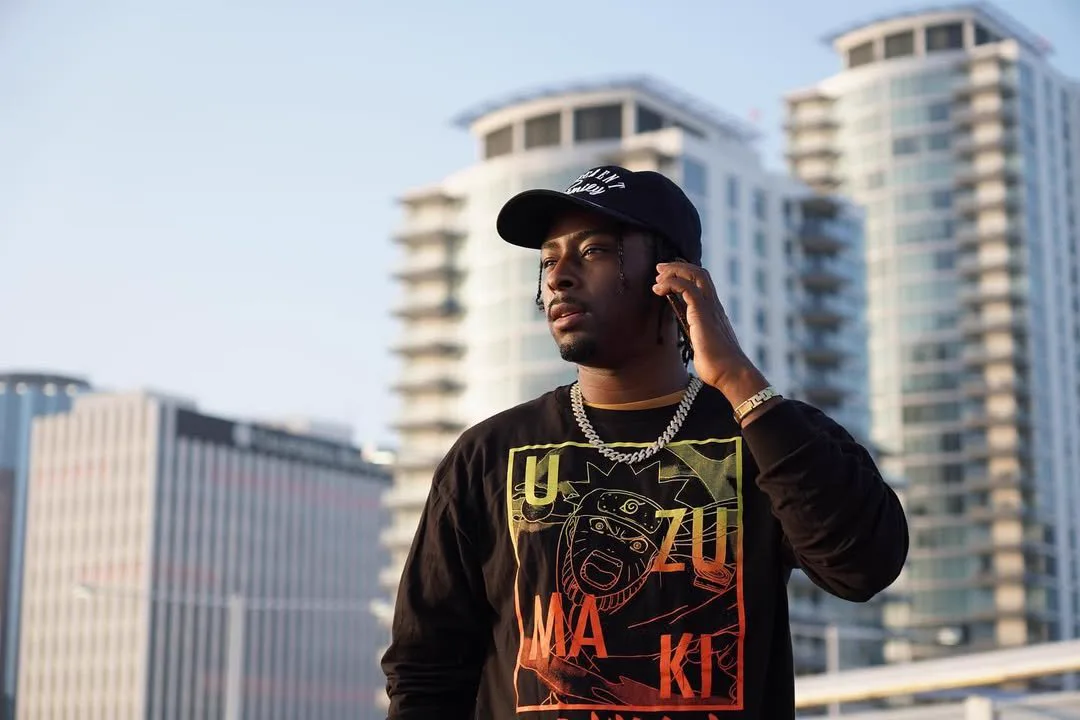
He beat more than 33,000 applicants, according to Kalshi. Bloomberg says 35,000 in the headline of its November 21 story.
The exact amount was not disclosed. The job post, published a week before launch, promised a flat $100K to $120K for the project plus $15K on completion, according to Dexerto and Covers. Exame, which picks up the Bloomberg story, says more than $100K plus DoorDash credits (DoorDash is a food delivery app).
What did the job require?
The role is called GTA VI researcher and has clear deliverables, according to Covers and Dexerto:
- Beat the story mode live, on Twitch or YouTube, with a face cam.
- Start at midnight on November 19, right at launch.
- Deliver one weekly report on the economy of Leonida, the fictional state where the game is set, covering the most efficient ways to make money in the game.
- Give a speech on the "state of the economy of Leonida" at the end of the project.
- Be at least 18, with 10 years of gaming, 3 years of streaming, and your own channel and equipment.
It is a per-project contract with a beginning, middle and end, and with pieces the company can turn into its own content (the report, the speech). The stream is just the delivery vehicle.
Why pay so much to someone with 30 viewers?
Because Kalshi sells contracts on GTA 6, and the job post turned into a free ad. The company has markets on release date, sales, Metacritic score and the PC version, and the release date market alone passed $7.5 million traded, according to Covers. An absurd "play GTA for $100K" job post earned coverage from Bloomberg, Yahoo, Dexerto, Exame and plenty of other outlets. No sponsored post from a big streamer would have produced that much text with the company's name in it.
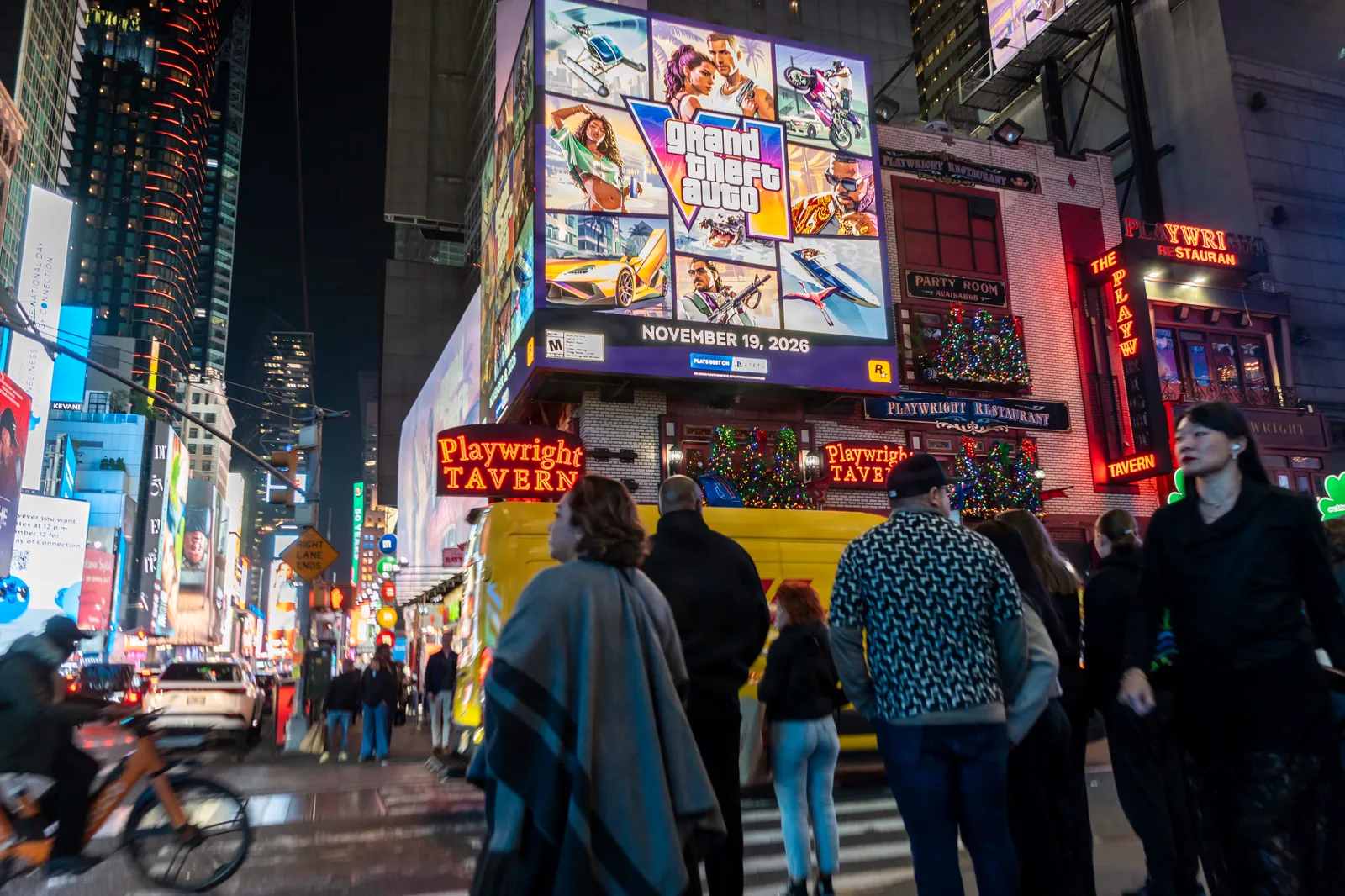
It is the same logic as the street billboards for the launch, only much cheaper: Kalshi piggybacked on the attention the launch already had and put one person in the middle of it.
Salman Sohani, from Kalshi's growth team, said the company wanted an unbiased view of the game instead of a big name, according to Exame. I believe that in part. The other part is that the unknown streamer is the story: "the guy with 30 viewers got the dream job" sells better than "famous streamer did a sponsored stream."
And it worked for him too. On launch night, at 9 p.m. local time, Savage streamed for seven hours with the Kalshi logo on screen and drew about 2,000 viewers, according to Exame, which cites Bloomberg. His Instagram reached almost 21,000 followers. That is a big jump for someone who was getting 30.
Who wins and who loses with this kind of sponsorship?
The consistent streamer wins. The 685 straight days of streaming showed up in Kalshi's announcement as a reason for the pick. Consistency is something a small creator can have and a big one does not always have, and it became a selling point.
Whoever has an easy story to tell wins. A musician turned streamer, an ordinary 36-year-old, and the job post asked for someone whose parents "said video games would never pay the bills." The brand bought the character along with the hours of streaming.
Whoever reads this as a pricing trend loses. It was one job for more than 33,000 applicants. The real market movement is in Twitch's numbers: the number of sponsored streamers quadrupled while the money only doubled, which means more people getting smaller checks. The Kalshi case is a marketing exception, not a rate card.
Whoever takes money from someone who cannot advertise in Brazil loses. This is the point that matters most for Brazilian readers.
Does this work in Brazil?
No. Kalshi and Polymarket are among the 27 platforms the government blocked on April 24, 2026, accused of offering "illegal betting," according to Bloomberg Línea. The block came after a resolution from Brazil's National Monetary Council that bans contracts on sports, political and entertainment events. A market on a video game's sales or review score is exactly entertainment.
The curious detail is that Kalshi's co-founder, Luana Lopes Lara, is Brazilian (Savage thanked her in the post where he celebrated getting the job), and the company's plans for the country were put in doubt by the block, according to Bloomberg Línea itself.
For creators, the consequence is direct. Brazil's MP 1.394 bans betting advertising aimed at the Brazilian public, and Instagram has already made entire profiles of betting influencers unavailable in Brazil. If the government treats prediction markets as illegal betting, I would not put the logo of any of these platforms on my stream, no matter how big the check. What is at stake is the whole profile disappearing for the Brazilian audience.
What can you copy with a brand that is allowed to advertise?
The format. Kalshi paid for a project with deliverables and a clear end. That is much easier to sell to a Brazilian brand than "pay me to talk about you on stream."
In practice, a proposal inspired by this case would have:
- A goal in the game, with an end date. Beat the story, get the platinum trophy, complete every mystery on the map. The brand knows how many hours it is buying.
- A recurring deliverable that is not the stream. Kalshi's weekly report becomes, in Brazil, a short weekly video summing up the series, or a fixed "best moment of the week" clip with the brand.
- A hook that fits the brand. Kalshi asked for economy because it sells contracts. A food delivery brand can back "beat GTA 6 without leaving the house"; a mobile carrier, "the stream that never drops." TIM already paid for stream hours at launch, with programming at its Oscar Freire store and a meetup with Gaules, as I covered in GTA 6 and the creator economy.
- Your current numbers. Peak viewers, views on your clips and consecutive days streaming. Brands today pay for results, as I explained in the follower-based rate card is dying.
And if you close a deal, flag the sponsorship throughout the whole stream, which is what the Senacon ordinance asks for.
What to do starting today
If you stream GTA 6, the Savage case shows that a consistent series has value before it has an audience. Keep your streak going, pick a goal for your campaign in the game and write down your numbers every week.
A stream on its own never reaches any brand: what circulates are the clips. With Cut.Pro you clip your stream with AI while it happens, in vertical format and with captions, and publish to TikTok, Instagram, Facebook, Threads, X, LinkedIn, Bluesky, Pinterest, Telegram, Mastodon, Discord, Dailymotion, Tumblr, Slack, Car.Media, and YouTube. If your channel already has people asking for clips, you can open a GTA 6 clipping championship with a prize starting at R$ 5,000 and let other people spread your series.
And when a proposal comes in from a betting or prediction site, answer with a polite no. Six figures from a sponsor that is blocked in the country do not pay for the channel you spent 685 days building.