How to launch a product on TikTok Shop: 6 tactics from an agency
The founder of Social Commerce Club, a TikTok Shop agency acquired by Podean, opened up the playbook he uses to launch brands: sampling at scale, 200 sales before ads and every creator posting on the same day. I translate each step for sellers in the Brazilian market and for the affiliate on the other side.
How to launch a product on TikTok Shop: 6 tactics from an agency
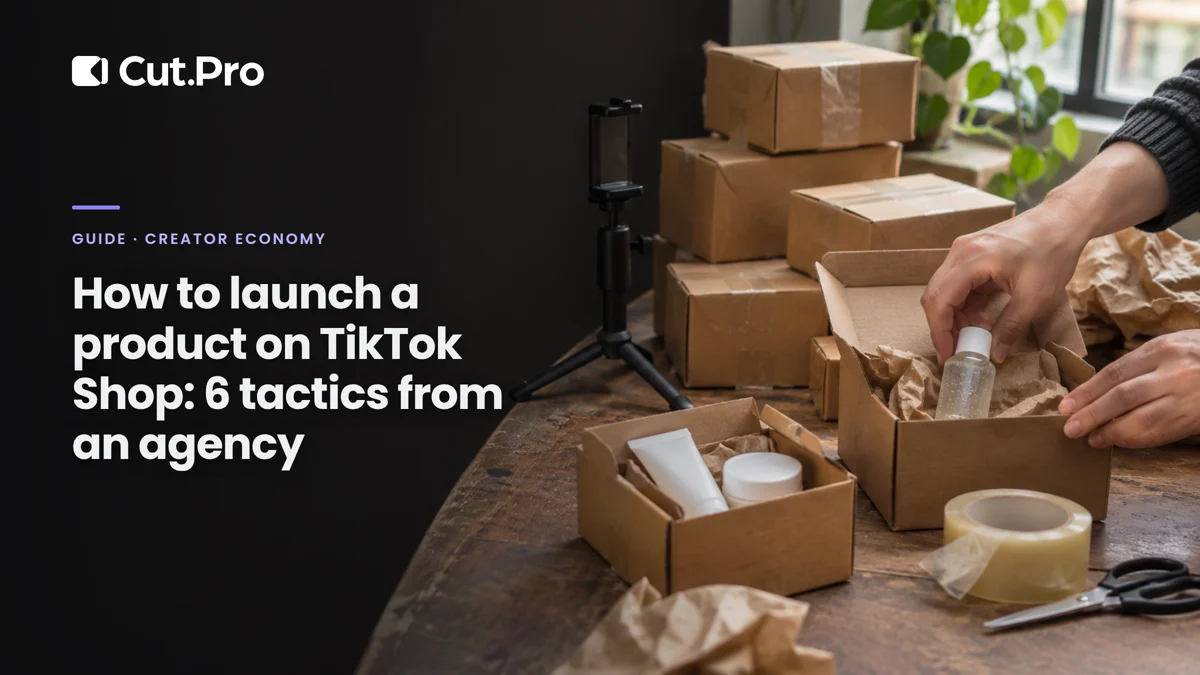
Launching a product on TikTok Shop works when you treat the store like a media campaign: samples for lots of affiliates, proof of sales before ads and everyone posting on the same day. That is the short version of the playbook Jordan West, founder of Social Commerce Club, laid out on the Honest Ecommerce podcast, which Net Influencer organized into six tactics on November 8.
Social Commerce Club is a Canadian TikTok Shop agency about 19 months old, acquired by Podean in July. Before it, West ran eight brands of his own. His market is North America, so not everything can be copied. Below is each tactic, what I would take to the Brazilian market and what changes for the person on the other side, the affiliate.
Step 1: send samples to lots of people and invest in a few
The rule is samples in volume and concentrated effort on the people who deliver. West calls it the "80/20 of the 80/20": out of 100 creators who receive the product, about 20 make a usable video and about 4 are excellent. Those 4 go into a WhatsApp group and get direct conversations, and the goal becomes getting as many videos out of them as possible.
TikTok Shop ranks affiliates in levels from L0 (no sales) to L7, based on the total a person sold across all brands in the last month. The values for each tier vary by country: the US table published by Cruva, a prospecting tool, uses a 30-day window, and the interview mentions 28. Use the level as a signal of who already sells, not as an exact ruler.
Step 2: reach 200 sales before paying for ads
West recommends not turning on paid ads until the store has a sales history. GMV Max, the TikTok Shop ad format that blends organic video, ads and affiliate posts in a single campaign, does not spend on a new store without sales, he says, and the number TikTok gave him internally is 200.
Here is an important caveat. The official GMV Max page says you can start as soon as your shop is set up and that the format is available in every TikTok Shop market, which includes Brazil. The 200-sales threshold is one agency's experience, not a published rule.
How he gets there: he uses Selico, a sampling service approved by TikTok Shop, to put the product in the hands of 200 buyers. I found no confirmation that Selico operates in Brazil. West's example is a brand with about 10,000 pieces of content that couldn't spend until it passed 200 sales and now invests US$ 60,000 a day in GMV Max.
Step 3: set a date and release everything at once
A strong launch is synchronized. The agency sends samples to about 6,000 creators at level L3 and above, asks them to hold their posts until a set date and to have at least five videos ready. On the day, the ad spend goes in concentrated behind the wave. According to West, TikTok itself started recommending this synchronized launch.
The detail that caught my attention most was the incentive: a contest with a US$ 250 bonus for anyone who delivered 20 videos (AI-made video didn't count) produced 32 videos per sample sent.
For a Brazilian brand, the logic of many people publishing in the same window is the same as a clipping championship. On Cut.Pro, the brand creates the championship, sets the prize and rules, and clippers publish clips of its content in the same period. The catch: a championship clip carries no affiliate link, so it works as reach, and the sale still happens through the affiliate and the store. I explained the setup in clipping championships for brands.
Step 4: set aside cash for three to six months without profit
Most brands don't break even in under three to six months, according to West. He treats TikTok Shop first as an advertising channel, and the argument is the effect outside it.
The numbers he cites: a Finaloop report showed that brands above US$ 1 million a year on TikTok Shop grew total revenue three times faster than a control group, with a contribution margin 3.5 times higher. And Portland Leather Goods went from US$ 40,000 to US$ 2 million a month on the channel, with another US$ 200,000 a day showing up in retail and on its website, which West attributes to the TikTok effect.
Read with care: these are cases chosen by someone who sells the service. The useful lesson is about cash. Anyone who opens a store expecting to cover the bills in month one gives up in month two.
Step 5: reuse the affiliate's video on other channels
Affiliate video is made to sell, because the affiliate only earns when they sell. That is why the agency licenses the best ones and uses them in Meta and TV ads.
In Brazil, do this with a contract. Agree in writing on using the video outside TikTok, for how long and for how much. For the affiliate, this license is extra income on top of the commission, and it is worth charging for.
Step 6: a small brand does it in-house
Below roughly US$ 2 million in total sales, West recommends hiring an assistant and learning to produce content for the brand's own accounts. He says a US$ 3,000-a-month agency "just won't be worth it" at that size. A large brand, with US$ 10 million or more in other channels, can run, he says, 19 extra marketing accounts pointing to the store.
For anyone at that stage, the bottleneck is video volume. If the brand already goes live or records long demonstrations, clipping that material is cheaper than shooting from scratch. The formats that convert are in TikTok Shop in Brazil: the year clips became a storefront.
And if you are the affiliate?
The method shows how the brand picks you. Out of 100 who get a sample, 4 become a priority. What sets those 4 apart is delivery: video on time, more than one angle of the same product and sales that show up in the brand's dashboard.
In practice:
- Ask for the sample by explaining the video. Say the format (demonstration, before and after, objection answered) and when you will post.
- Deliver more than one video per sample. If the launch standard calls for five, whoever delivers one drops off the list.
- Respect the date. Posting early ruins the brand's wave and burns the relationship.
- Charge for the license. If the brand wants to run your video as an ad outside TikTok, that is a separate service.
The mistakes I see most: accepting samples for everything, delivering one generic video and disappearing, and treating the L level as vanity. It drops when you stop selling.
Where to start
If you sell: pick one product, send samples to at least 100 affiliates, set a date and don't turn on ads until you have accumulated sales. If you are an affiliate: pick a few brands and become one of their four. For November, the calendar is in Black Friday for people who clip, and the change TikTok is preparing for purchasing is in TikTok Shop gets its own app.