YouTube video A/B testing: retention picks the winner, not the click
YouTube explained how video A/B testing will work: it runs the versions, shows each one's retention curve and gives you seven days to pick the one that stays. There's no release date yet. Here's what you can already test today, who benefits from the change and how to get your channel ready.
YouTube video A/B testing: retention picks the winner, not the click
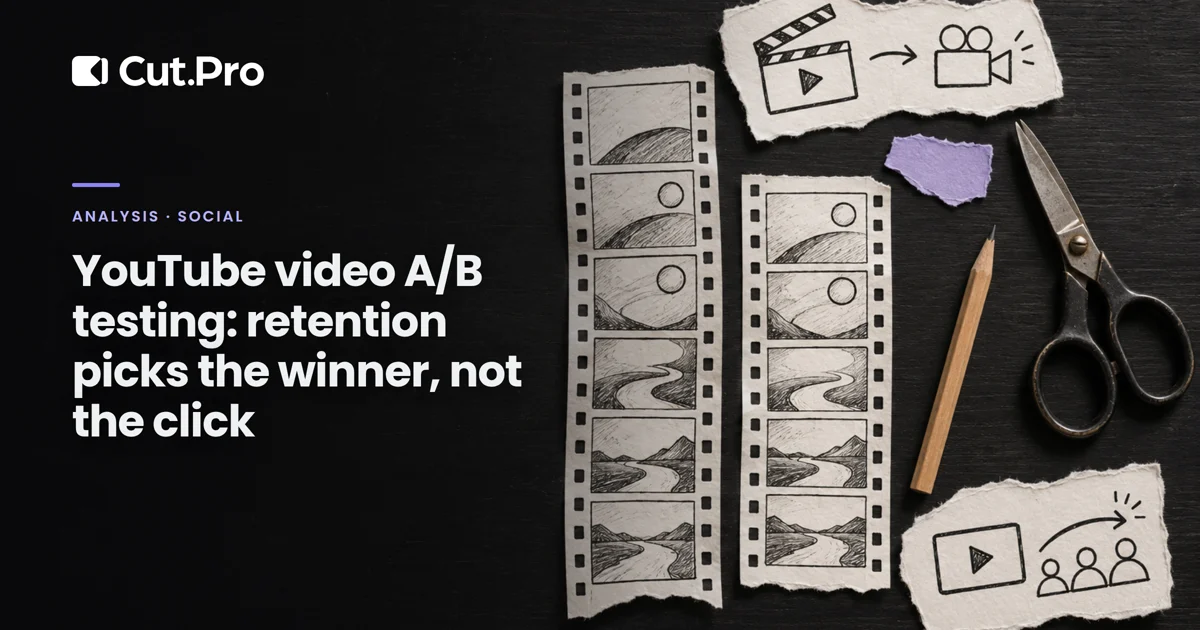
YouTube's video A/B testing will work like this: you upload different versions of the same video, the platform shows each one to part of your audience, returns each edit's retention curve and gives you seven days to pick the one that stays. The details came out this Monday (16th) on the official YouTube blog, in a Creator Insider conversation between Paddy Galloway, a creator known for analyzing channel data, and Amjad Hanif, vice president of product for creators.
My take: this feature moves the fight from the thumbnail to the first few seconds. Until now, the only thing you could test after publishing was what makes someone click. Soon you'll be able to test what makes them stay.
What YouTube just detailed
The conversation doesn't include a release date, but it adds how each piece will work. In short, according to the post by Rene Ritchie, who bridges YouTube and creators:
- Video A/B testing. YouTube runs the test, delivers the results, and the creator has seven days to pick the edit that stays. The results come with the retention curves of the versions. "That's why we focused so much on retention curves, because that's the real learning from A/B testing," Hanif said.
- The intro as the target. Hanif expects the main use to be testing the opening. "Everybody knows the difference an intro makes," Galloway said.
- Dynamic thumbnails. You provide three thumbnails and YouTube serves each one to a different audience segment, based on what works best with each group, such as people who already watch you and people arriving for the first time. Instead of one winning cover for everyone, each group sees its own.
- Ask Studio before and after upload. A storytelling assistant lets you work on the idea while it's still a draft, with suggestions based on your channel and audience, before you upload the finished video. And catalog optimization flags old videos that could perform better with an updated thumbnail.
The pieces were already announced at Made on YouTube on September 23, where YouTube promised to "test up to three versions of the same video" and marked the feature as "coming soon." TechCrunch reported that version testing for Shorts starts in 2027. We covered that announcement in YouTube's AI editor. As of today, there's no confirmed date, or any word on when it reaches Brazil.
What you can already test today
Today, A/B testing works for titles and thumbnails, and only on desktop. According to the YouTube help center, these are the rules:
- Open YouTube Studio on your computer and go to the video from the Content menu (or during upload, under Create and Upload videos).
- In the Title or Thumbnail box, click A/B testing.
- Choose "Title only," "Thumbnail only" or "Title and thumbnail" and upload up to three options.
- Click Done. Progress shows up in the video's Analytics Reach tab, under Manage test.
The test ends within two weeks. The option with the highest watch time starts showing for everyone. If there's no statistical difference, the result is marked inconclusive and the first option you uploaded stays. You need advanced features turned on, and the test doesn't support videos made for kids, adult content, private videos or Shorts.
If the option doesn't show up in your Studio, the first thing to check is advanced features. Video A/B testing should appear in the same place once it arrives, but that's my own guess: YouTube didn't show the screen.
Why the retention curve is the part that matters
Because click-through rate alone is misleading. A thumbnail that overpromises wins the click and loses the person at second twelve. The title test already accounts for this: it picks the winner by watch time, not by who got clicked more.
The video test brings the same logic inside the video. With two curves side by side, you can see the second where each version loses people. If version B holds 10 points more in the first 15 seconds and then both run together, the rest of the video was fine and the opening was what lost viewers. Today you only get to that conclusion by publishing another version days later, with a different time of day, a different feed mood and different competition.
Galloway shared what he tends to see when he reads these curves: audiences tend to dislike scripted or manufactured moments and prefer authentic ideas and personal stories. That's an analyst's read, not an algorithm rule, but it's exactly the kind of hypothesis the test will let you confirm on your own channel.
Who wins and who loses
Anyone who can make cheap variations wins. Testing two openings costs one extra edit. For people who record talking head with three takes, it's easy. For people who clip podcasts or livestreams, too: the same segment can start two seconds earlier, with context, or straight on the punchline. We covered that choice in hooks for the first seconds.
Anyone with a back catalog wins. Ask Studio reviewing old videos and testing a new thumbnail is the most underrated feature in the package. A channel with 300 videos has dozens of covers made in a style that has aged. Today nobody goes back to swap them, because it's work and the payoff is uncertain.
Anyone selling the test on the side loses. Talking about dynamic thumbnails, Galloway said "it's always a good sign when you add things that people like me have been trying to build behind the scenes for years." Third-party thumbnail testing tools and consultancies that live off comparing covers will need to offer something else.
Small channels gain less than it seems. This is my read: a test needs volume to separate the versions. With a few hundred views per video, the odds of an inconclusive result are high, and the help center already covers that case for the title test.
What about Shorts and clips?
For now, nothing changes. Title and thumbnail testing doesn't work on Shorts. Version testing is expected to include the short format: according to PPC Land, the narration of the Creator Insider video says "Shorts or long-form video," and TechCrunch mentions Shorts starting in 2027.
When it arrives, Shorts is where the test makes the most sense. In the vertical feed the cover barely matters; what decides is the first frame and the first seconds. Since thumbnail testing doesn't even apply to Shorts, the opening will be the first thing you can truly test in the format.
What to do now
- Turn on advanced features and test the title on every long video. It's the only test available today, it's free and it builds the habit of publishing with two or three options.
- Read the retention curve of your last 10 videos. Mark the second where each one loses half its audience. If the drop is always at the start, the problem is the intro, and that's what you'll test first. Ask Studio answers this with one question.
- Start keeping two openings for the videos that matter. One with context, one straight on the strong line. When the test arrives, you'll already have material and a hypothesis.
- List the old videos that still get search traffic. They're the first candidates for a new cover, whether through Ask Studio or by hand in the thumbnail test that already exists.
For anyone clipping long videos, the expensive part of having two versions is finding the segment. On Cut.Pro, you paste the podcast or livestream link and get candidate clips with transcript and captions, and in the editor you change each one's entry point. Generating the second opening becomes a tweak, not a new cut from scratch.
My take
I like the direction. For years, optimization on YouTube was thumbnail and title because that was what you could change after publishing, and that pushed everyone toward the same shocked-face-and-red-arrow look. Measuring by retention rewards something else: opening well and delivering on what the cover promises.
The catch is the wait. The feature was promised in September and today's conversation explains how it works, but for long video nobody at YouTube said when it will show up in your Studio. Until then, the title test is there, free, and most channels have never run one. I'd start with it this week.