Grok Imagine loses about 60 people: what it means if you generate video
SpaceX's AI division laid off about 60 people from the Grok Imagine team, according to The Information, and only a handful stayed to keep the generator running. Here is what that usually means for a product, and how to build a workflow that does not depend on it.
Grok Imagine loses about 60 people: what it means if you generate video
SpaceX's AI division, which absorbed xAI, laid off about 60 people from the Grok Imagine team, the image and video generator inside Grok, according to a report from The Information published on November 13. If you use the tool, the takeaway is simple: it still works, but a product kept alive by "a handful of people" tends to stand still while Google, ByteDance, and Kling keep shipping new versions.
What do we know so far?
About 60 layoffs the week before the report, and only a few employees stayed to maintain the product. The original The Information article is behind a paywall; the details below come from outlets that read it and followed up, such as 24/7 Wall St. and Startup Fortune.
- SpaceX has not confirmed the cuts, their size, or the future of the product.
- Grok Imagine is still live, with image and video, and none of the reports mention pulling it from any country.
- There is no new roadmap or release date for the next version.
- Startup Fortune says the 60 are "more than half of the team". That number comes from the same anonymous sourcing, so treat it as an estimate.
In the xAI API, the video model grok-imagine-video-1.5 is still listed, priced at $0.08 per second of generated video. If you have an automation pointing at it, you have lost nothing today.
Why did this happen eight months after "doubling down"?
Because video is expensive to serve and Grok Imagine was not winning. On March 25, right after OpenAI shut down Sora, Musk wrote on X that the next version of Grok Imagine would be "epic" and that the company was "doubling down", as Business Today recorded. Eight months later, the priority has changed.
According to 24/7 Wall St., the report points to three reasons:
- Management wants to concentrate people on coding tools and on Grok Bot, the agent product. SpaceX closed the purchase of Cursor in August, at an implied value of $60 billion.
- Generating video takes far more compute than generating text.
- Grok Imagine trails the leading video models in independent comparisons.
Startup Fortune adds the business side, which I think is the most important part: coding tools sell to companies that pay per seat or per token, while AI video is used mostly by consumers on cheap or free plans. The math does not work out the same way.
There is also a context of departures. Startup Fortune notes, citing TechCrunch, that after the merger with SpaceX in February more than 50 researchers and engineers left the company, among them Haotian Liu and Guodong Zhang, two names tied to Imagine's leadership.
What usually happens to a product in this situation?
It goes into maintenance: it keeps responding and they fix what breaks, but it stops evolving. This has happened before with consumer AI tools. The most recent case is Sora itself, which OpenAI shut down for good.
In AI video, standing still is expensive. In 2026 the bar rose fast: Gemini Omni 1.2 Flash reached 15-second clips at a 30% lower price, TikTok Symphony started generating 30 seconds with Seedance, and Kling 4.0 and Seedance 2.5 compete on facial detail. A model that goes six months without an update becomes, in practice, a second-tier model.
The three practical risks if you use Grok Imagine today:
- Frozen quality. Today's result is the result six months from now, while the others get better.
- Moderation and bugs with no owner. With a small team, a filter that blocks a legitimate prompt or a generation failure takes longer to fix.
- Price and plan can change without notice. A product in maintenance mode is the first candidate to be repackaged, limited, or shut down when the company reviews costs.
I tested the same prompt on Grok Imagine and on another model
Grok Imagine Image 2.0 is in the Cut.Pro Generator, so I ran the same request on it and on Nano Banana 2, from Google, to see how much switching costs. The prompt: "Vertical photo of a street food vendor in São Paulo flipping pastel in hot oil at night, steam, neon reflections on wet pavement, handheld phone photo look", in 9:16. (Pastel is a Brazilian fried pastry.)
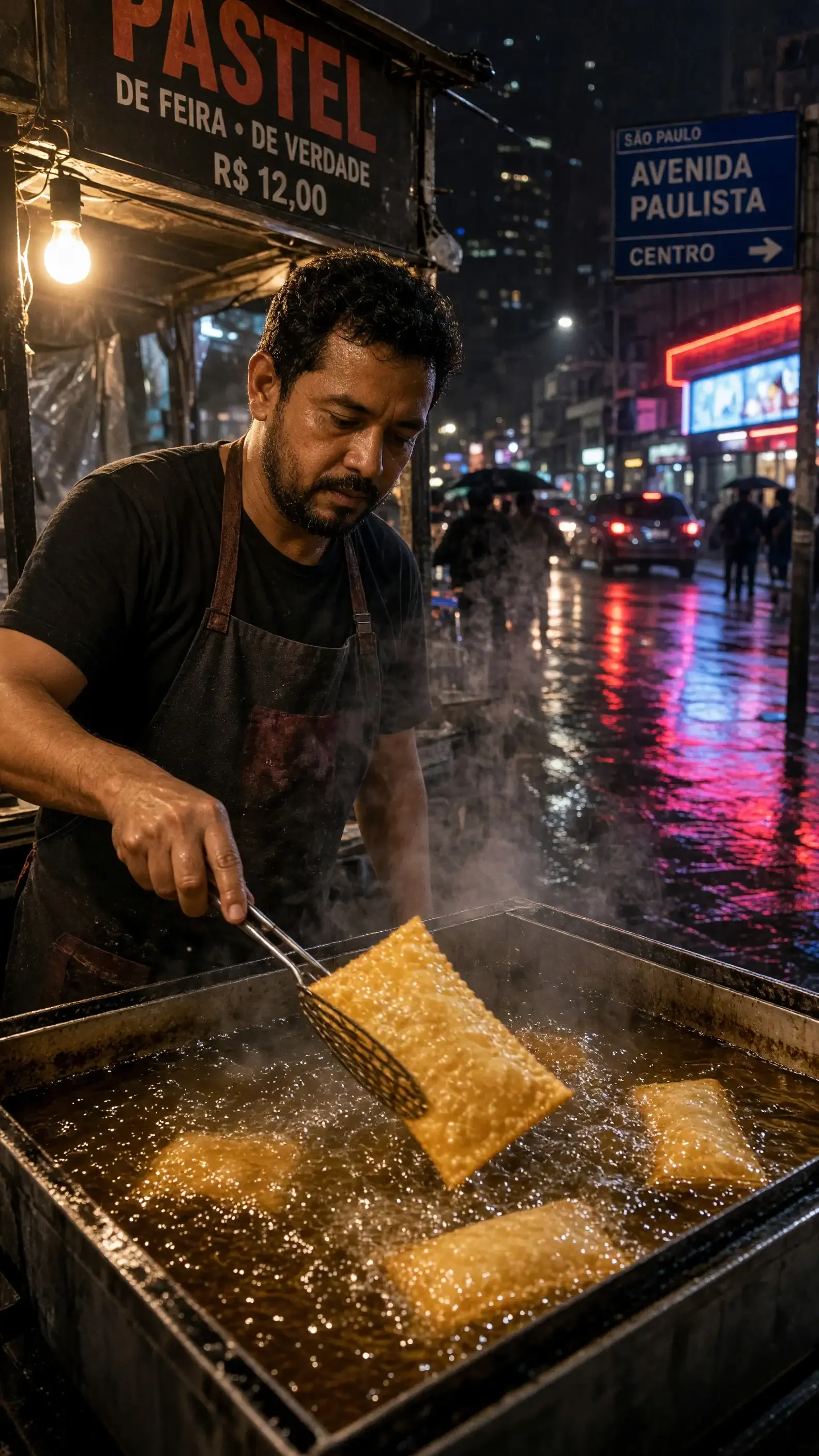
Grok Imagine cost 4 credits. The image is clean: the pastel on the skimmer has the right crimped edge, steam rises off the oil, and the letters on the sign ("Pastel de feira, de verdade, R$ 12,00") came out without errors. The problem is the stock-photo look. The light is too cinematic for a "phone photo", and it squeezed an Avenida Paulista sign into the corner, as if it needed to prove this is São Paulo.
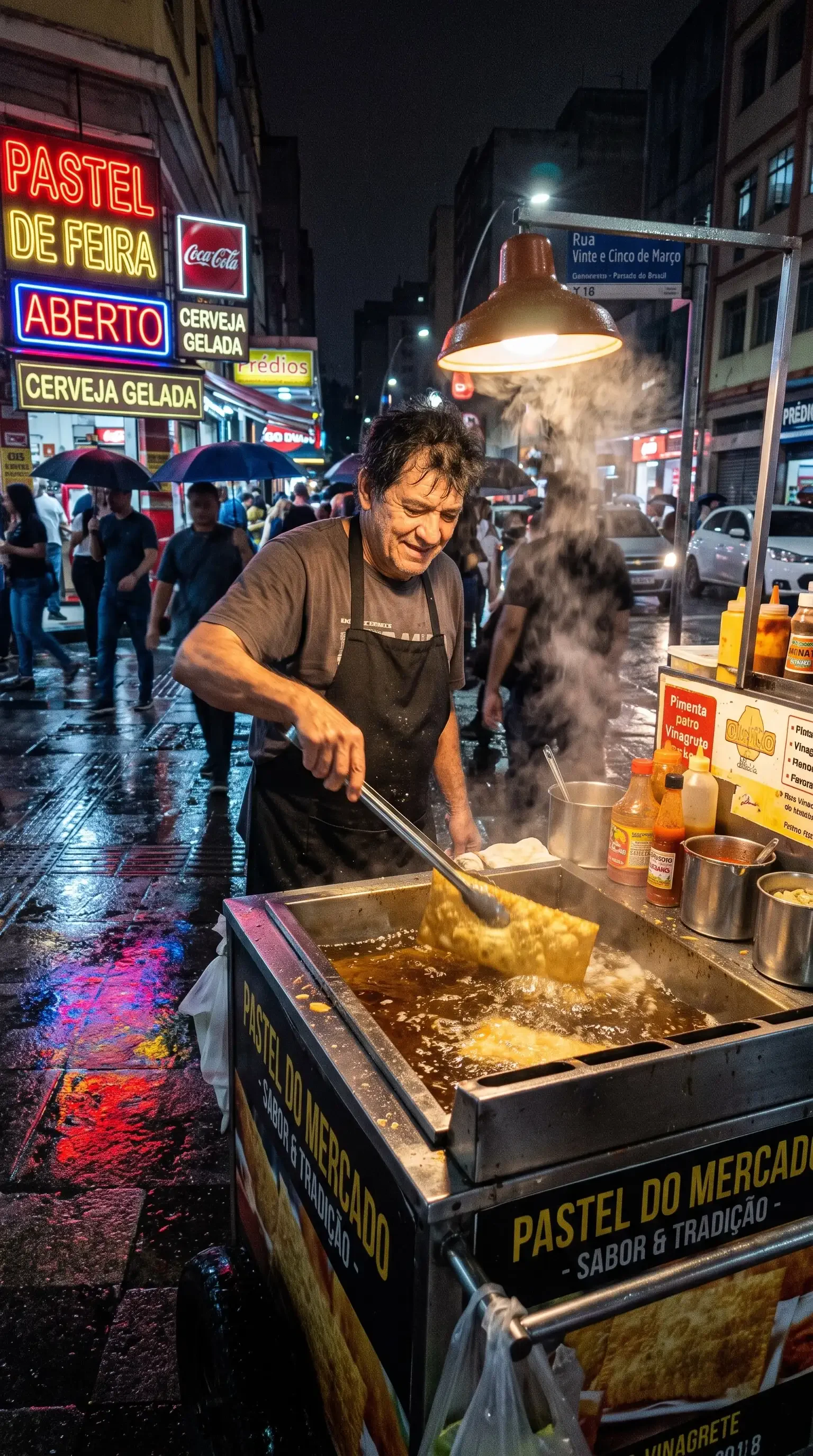
Nano Banana 2 cost 6 credits and got closer to the "phone in hand" feel: a crowded street, umbrellas, a cart with sauces, neon reflected on the sidewalk. In exchange, it made more mistakes in the details. The pastel turned into a shapeless blob, the small letters on the cart became an invented word ("Vinagruto"), and a Coca-Cola logo showed up that you would not want in a post sponsored by another brand.
To me, it is a technical tie with different profiles: Grok for a clean image with legible text, Nano Banana for a street scene that looks like a candid shot. The lesson of the test is something else: the prompt was the same, and switching models took one click. That is exactly what you want ready before you need it.
What to do now if you use Grok Imagine
You do not need to run. You need to stop depending on a single model.
- Keep your prompts somewhere you own. A spreadsheet, a note, whatever. A prompt that works is the asset; the model is a supplier.
- Run your three most-used prompts on another model this week. For short video, Seedance, Kling, and Wan are the obvious candidates. Compare cost per second and how much you had to redo.
- Do not tie automations or a fixed format to it. If you have a weekly series, or an AI persona whose look depends on how Grok draws, test now whether it holds up on another model. A character that only exists in one generator is held hostage by it.
- If you use the API, keep the model name in a variable. Switching from
grok-imagine-video-1.5to another should be one line, not a weekend. The post on the Seedance API price in reais has the code example and the price-per-second math (in Brazilian reais).
A simple way to do item 2 is the Cut.Pro Generator, which puts video models like Seedance, Kling, and Wan and image models like Grok Imagine Image 2.0 itself in one place, with the cost in credits shown before you generate. The generated video opens in the editor for captions and goes from there to publishing on social, with no download and re-upload.
My take
I would not read this as "Grok Imagine is dead". I would read it as the end of the phase where xAI tried to fight for consumer video. The company looked at the numbers, saw that the ones paying are businesses buying coding tools, and moved the people there. It makes sense for them and says a lot about the market: AI video is becoming a fight over who has cheap compute and scale, and today those names are ByteDance, Google, Alibaba, and Kuaishou.
For creators, the consequence is both good and bad. Good, because competition among those who remain keeps pushing the price per second down. Bad, because every tool you adopt can become the next Sora. The workflow that holds up is the one that treats the model as a swappable part: your own prompts, characters with their own references, and no automation tied to a single name.
From today, I would do one thing: take the prompt that worked best for you on Grok Imagine this year and run it on two more models. If one of them ties, you already have a plan B. If none does, Grok still works, and you know exactly what you are risking.