Disney orders 10 illusion videos from Zach King: what it tells us
On November 18, Disney announced a deal with Zach King for 10 original Illusion Shorts, distributed exclusively by Disney, including on Disney+. Here is what the studio is buying, what the announcement left out, and what a Brazilian creator can take from it when negotiating with brands.
Disney orders 10 illusion videos from Zach King: what it tells us
Disney announced on Wednesday (Nov. 18) a partnership with creator Zach King for 10 original Illusion Shorts, short illusion videos the company will distribute exclusively, including on Disney+. The amount was not disclosed. What stands out is what Disney bought: a signature format and the right to show how it is made, not a sponsored post on his profile.
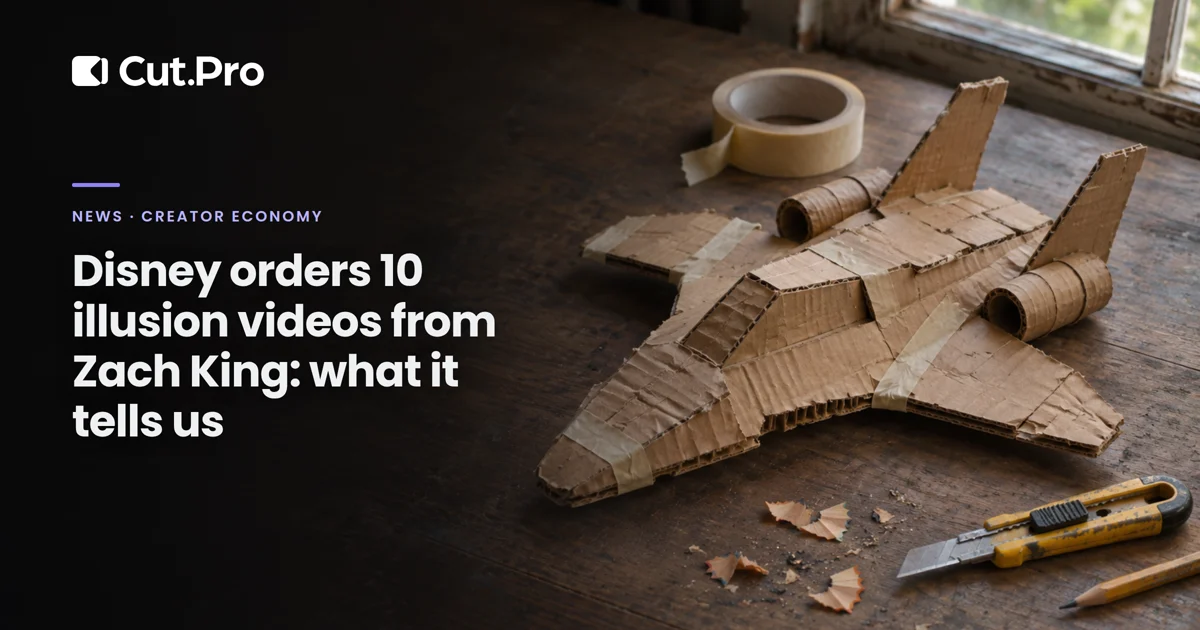
The official announcement says the videos draw on Hexed (released in Brazil as Enfeitiçadas: Bem-Vindos a Hexe), on Star Wars and on other Disney films and experiences. The deal has two more parts: the film Cardboard Wars, King's tribute to the 1977 Star Wars made with cardboard sets, props and costumes, premieres on Disney+, and he produces behind-the-scenes videos for Disney's social channels showing the filming and the visual effects behind the illusions. Variety also reported the news.
Who is Zach King, and why did Disney want him?
Zach King makes the "magic" videos, just a few seconds long, where an object passes through the screen, disappears inside another one or changes size, all done in editing. According to the announcement, he has more than 185 million followers across platforms and billions of views, and he now runs his own production company, King Studio.
Disney summed up its reasoning in a line from Asad Ayaz, chief marketing and brand officer: King "makes the impossible look real." In my read, there is a business reason too: King's format grabs the eye in the first seconds and works without sound or language, which is useful for selling a film worldwide all at once.
What does the announcement leave out?
Three answers are missing, and they matter to anyone who makes a living creating:
- Money. Neither Disney nor Variety discloses the amount.
- Dates. There is no premiere date for the shorts or for Cardboard Wars on Disney+. According to Variety, the film runs 52 minutes and premiered on YouTube on August 14, where it passed 3.9 million views.
- Brazil. The announcement does not name countries. There is no confirmation yet that the videos will show up on Disney+ in Brazil. Hexed opens in Brazilian theaters on November 26, a day after the US release.
It is also unclear what "exclusive" means. The text says the 10 shorts are for Disney to distribute, but that his illusions will also appear in new content "for Disney+ and for his own channels." In other words, King is not leaving his own social accounts, he is sharing the stage.
Does Disney already have other creator deals?
Yes, and the pattern repeats: Disney is building a portfolio of creators. In August came the deal with TikTok, which brings creator videos to Disney+ starting in December. On October 15, the partnership with Dude Perfect gave Disney the right to show part of the group's short-video library on Disney+, ESPN and the company's social channels. According to Variety, the list also includes 20 episodes commissioned from Dhar Mann Studios and a kids' series with Like Nastya.
In September, Disney had already gathered more than 350 creators at Created in LA in Hollywood, where Cardboard Wars was screened. Variety itself describes the strategy as a shift from one-off brand campaigns to long-term creative partnerships. It is the same move as YouTube, which is selling creator series as TV shows just as Netflix and Disney compete for this audience.
What changes for you?
For the average creator, nothing changes tomorrow: nobody is getting a call from Disney. But the deal shows what a big studio pays to have, and that works as a yardstick in any negotiation.
Look at the three pieces of the contract. Disney bought a recognizable format (a few seconds of illusion you can identify without seeing the creator's name), a library (a 52-minute film that already existed on YouTube and became a license) and the behind-the-scenes (the "how it was made" became a separate product). None of the three is "one feed post for $X."
In my read, that is the business message. Creators who only have reach sell one-off sponsored posts and compete on price, a problem we already covered in the post on brands charging for results instead of followers. Creators with a format and a library have something to license, and licenses are negotiated by term, territory and exclusivity, not by view.
The catch is obvious: it took Zach King years to get here, and the announcement is about someone with 185 million followers. The scale is different. The logic, though, scales down to any size.
What to do now
- Name your format. If your hit video has no repeating structure that someone would recognize without your name, it is still loose content. A named recurring segment is the first licensable asset.
- Keep the rights to your library. Before signing a brand deal, read the image and content usage clause. A "perpetual" grant "across all media" hands over for free what Disney paid to have. There is a checklist for this in our brand deal guide.
- Treat the behind-the-scenes as a product. Record the process. For anyone who does effects, editing or illusions, the "how I did it" earns as much as the final video and can be offered to the brand as a separate deliverable. If the behind-the-scenes comes out as a long video, Cut.Pro cuts the clips with captions and publishes or schedules them to TikTok, Instagram, Facebook, Threads, X, LinkedIn, Bluesky, Pinterest, Telegram, Mastodon, Discord, Dailymotion, Tumblr, Slack, Car.Media, and YouTube at once.
- Ask what "exclusive" means. In King's case, exclusivity on the 10 shorts did not take the creator off his own channels. Get in writing which channel, for how long and in which countries the exclusivity applies.
- Consider equity instead of just a fee when the relationship is long, as creators who become brand partners already do.
Disney did not reveal what it paid, and maybe never will. But the contract shows where it sees value, and none of these pieces requires 185 million followers to get started.