Virality tools in 2026: what they are, what they aren't, and which one works
There's a category of software that promises to make you go viral. Half of it is hot air, half of it works. The difference is understanding what the tool actually does: it doesn't invent a hit, it speeds up someone who already has good material.
Virality tools in 2026: what they are, what they aren't, and which one works
"Virality tool" has become a strange term. Half of what shows up on Google under that name is an empty promise, made to sell a course. The other half is serious software that solves a real bottleneck.
It's worth separating the two right away.
What a virality tool isn't
There's no button that turns your video viral. Any site or app that promises that is selling you a dream. The TikTok, Reels and Shorts algorithm can't be tamed by a trick, and no tool "injects" real views.

This type of product usually sells:
- A "real views" package (they're bots, your account gets flagged).
- A magic posting time (it varies too much by niche to have a formula).
- A song that's going to go viral right now (the trend already died the moment the tip went viral).
- A caption template that converts (doesn't exist).
All of that you can ignore.
What a virality tool really is
A serious virality tool is software that attacks the one real bottleneck: production. Creators who went viral in 2024, 2025 and now in 2026 have one thing in common: a consistent volume of short video.
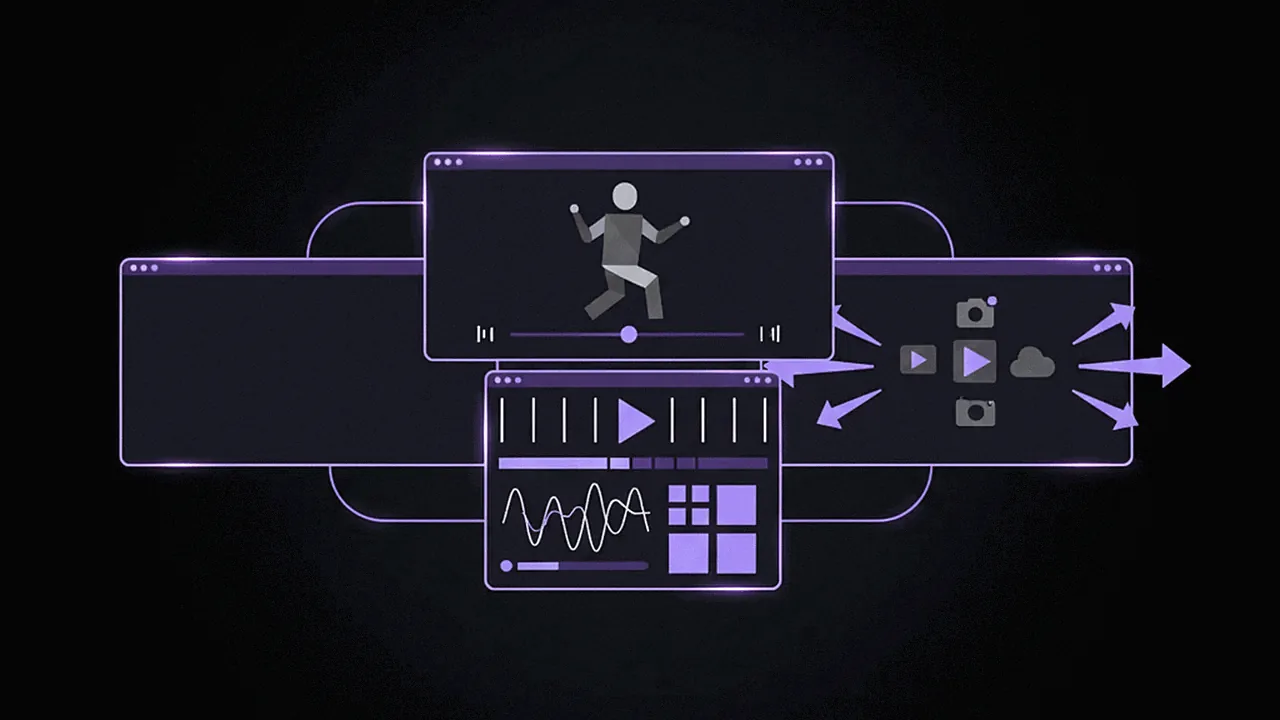
It's not quality above everyone else. It's not expensive production. It's posting a lot, every day, for months.
Nobody can record three videos a day for a year. Whoever does it uses a tool. The flow is:
- Record long content once or twice a week (live, podcast, vlog).
- The tool cuts that content into short videos with AI.
- It captions each clip in PT-BR with high accuracy.
- It scores the clips by viral potential, so you can prioritize what to post.
- It schedules and posts to all three networks directly.
That's it. The name "virality tool" is just the label. What it does is solve the production bottleneck so you can have volume without breaking.
What separates the good ones
I spent the last two years testing all the big tools. Three things decide it:
An AI that really watches. The difference between a mediocre tool and a good one lives here. The mediocre ones grab the transcript and search for keywords. They cut five seconds before, five after, and deliver. It works for a class, terrible for a live and podcast.
The good ones watch the whole video. They analyze speech energy, reaction, the pause before a punchline, the dynamic between two people. That's what Cut.Pro does. When the AI chooses by these criteria, the clip comes out with a strong hook and high retention, which is what the algorithm rewards.
Accurate captions in Portuguese. Most short-video consumption happens without sound. Getting the captions right is half the video. A generic transcription model stumbles on colloquial PT-BR: slang, accent, proper nouns. A noticeable caption error drops retention and the video disappears from the For You.
You can't review clip by clip. Cut.Pro was trained specifically on PT-BR so this problem doesn't exist.
Speed and direct publishing. If it takes an hour to process a live and another hour to post on all three networks, you won't use it day to day. A good tool processes in 10 to 15 minutes and posts to the networks from inside the panel. Without that flow, it becomes a chore.
Virality score: what's it for
Some tools, including Cut.Pro, score each clip from 0 to 100 by viral potential. Is that useful or is it marketing?
Useful, if it's based on real data. The score looks at the energy of the moment, the presence of a hook in the first 3 seconds, the duration, the speech density, the rhythm of the reaction. It's not a guarantee of going viral, but it helps prioritize: you're not going to post 15 clips from the same live. You post the best 4 or 5, space them on the calendar, and leave the average ones for a week with no new recording.
When the score is purely marketing (a random number to look sophisticated), you notice fast: the high-score clips don't perform better than the low-score ones. If you test for three weeks and there's no correlation, ignore it.
What no tool does for you
It's important to be honest: a tool solves production, not content. If you record material with no energy, no reaction, no point of view, no AI saves it. The AI cuts the best moment of whatever there is. If the best is lukewarm, the clip is lukewarm.

What you can improve before cutting:
- Record with energy. A switched-off live in a neutral voice yields a neutral clip.
- Have a point of view. A strong opinion generates a clip, general agreement doesn't.
- Treat the camera or the microphone like it's a real conversation. A newsreader posture doesn't go viral.
Take care of those three. Then the tool multiplies.
Which one to use in 2026
For a Brazilian creator, the short answer is Cut.Pro. It's the most advanced clipping AI in PT-BR, processes fast, scores each clip's viral potential, posts straight to TikTok, Reels and Shorts, and accepts Pix and card.
For the global English market, OpusClip and Klap are the alternatives. Both in dollars, both with below-par PT-BR caption accuracy.
Kapwing and Spikes Studio come in as editor options with some AI, but they don't lead in automatic clipping.
Start with volume
The truth every viral creator confirms: 90 days of consistency beats any other factor. Post 1 to 3 clips a day for 90 days, using a tool that doesn't get in your way. Almost always at least one video above 100k comes out in that period, and the channel starts growing on its own.
Without consistent volume, not even the best AI fixes it. With consistent volume and a decent tool, it's just a matter of time.
If you want to start, the free Cut.Pro plan delivers 15 credits per month with no card (1 credit = 1 minute of video analyzed). Enough to process a stretch of a live and see if the flow fits.
Quick FAQ
Do virality tools work? They work to speed up production. They don't work as a magic potion.
Which is the best in 2026? For Brazil, Cut.Pro. For English, OpusClip.
Do I need a lot of followers? No. TikTok and Shorts show your content to people who don't follow you.
How long until you go viral? With 90 days of consistent volume, a strong chance of a hit above 100k.
Is the tools' virality score reliable? Cut.Pro's is based on real retention data. Some competitors use a decorative number.