Brands are building their own scorecards to decide which creator posts to pay for
General Mills, Nestlé and agencies like Viral Nation have built their own scores to decide which creator content gets money, Digiday reports. Here's what each yardstick measures and what it changes about the video you deliver.
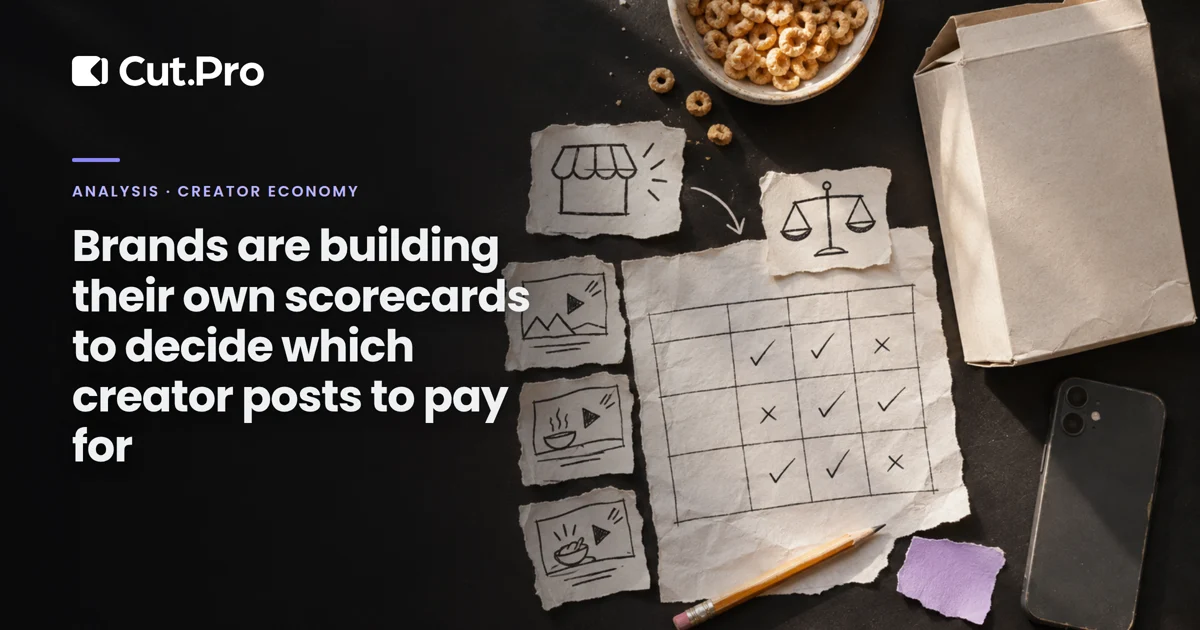
Brands are building their own scorecards to decide which creator posts to pay for
Big brands are building their own scores to decide which creator content is worth putting money behind, according to a Digiday report published on November 26. General Mills weighs shares and saves above impressions, Nestlé grades every video with an automated system before boosting it, and agencies sell similar formulas. My read: the conversation has stopped being "how much does your post cost" and become "does your post pass the brand's yardstick." If you know what the yardstick measures, you deliver the right video and charge better.
Why are brands doing this now?
Because the money got too big to decide by gut feeling. Digiday points to Madison & Wall's projection that creator spending will grow 12% a year through 2030, and says this budget is growing twice as fast as advertising overall. I broke down that math, $116 billion in 2026 alone, in the post on how much brands will spend on creators.
When the money comes out of the media budget, the people approving it are used to buying ads with a spreadsheet. And they want proof before they open the vault. Madison Gaudry-Routledge, who runs social at the agency Viral Nation, told Digiday that a brand has to show a piece of content is more likely to convert before any budget is released. Kristina Coughlin, of the agency Trevant, admitted the industry is still scrambling to put these yardsticks into practice. That's why everyone is inventing their own.
What does each yardstick measure?
There are four different models, and none of them starts with follower count.
| Who | Name | What it measures | What it decides |
|---|---|---|---|
| General Mills | Talkability score | Shares, creator remixes, how long the topic lasts, active engagement | Whether a trend earns more organic attention than a paid ad would buy |
| Nestlé, with CreatorIQ and CreativeX | Automated creative review | Brand, narrative and relevance, against Nestlé's internal ad standard | Which creator post gets money to become an ad |
| Billion Dollar Boy | Creator investment planner | Cost per thousand impressions combined across creators and platforms | How much share of conversation, impressions and earned media a budget buys |
| Viral Nation | Culture Quotient | Share of conversation, affinity and topic velocity | Whether the brand is gaining momentum faster than its competitor |
All four are closed systems. No company has published its formula, and General Mills declined to explain to Digiday how the score weighs into spending decisions. You can understand the logic, but not the math.
What does General Mills mean by talkability?
It measures how much free attention a brand earns from creators themselves, compared with what it would buy in ads. Mindy Murray, who leads influence and content at General Mills, told Digiday that the score changes from brand to brand and weighs active engagement: sharing, liking, commenting and saving. Active engagement is an action that takes effort from the viewer, unlike an impression, which is just the video passing across the screen.
Her example is cereal. The Reese's Puffs rap "Eat 'Em Up," on air since 2009, became a TikTok trend this year. General Mills brought in the rapper GloRilla to rerecord it and turned it into a streaming and YouTube campaign, with the remix released in June. The company says sales rose 2.5% over the previous year, but it didn't share the numbers or explain what role the score played in the decision.
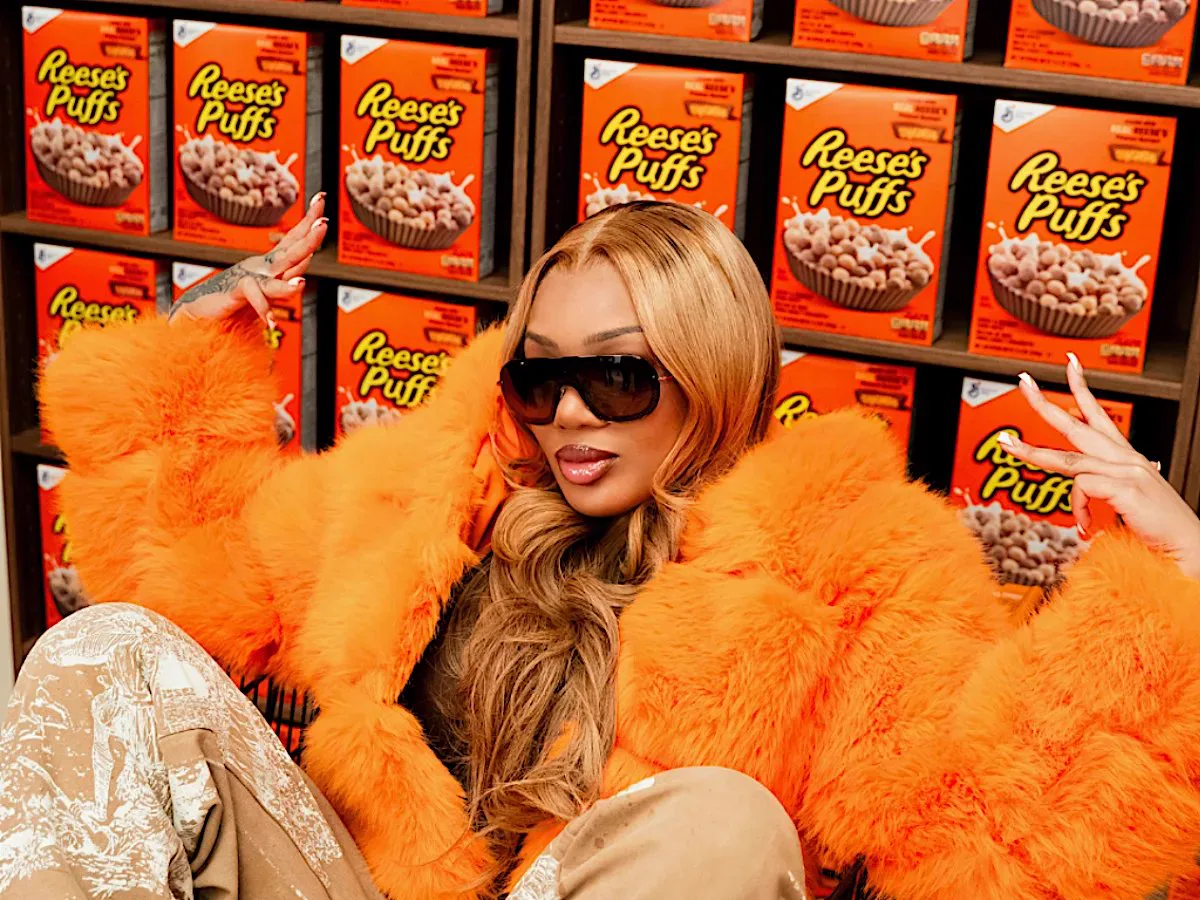
What I take from this as a creator: the brand is looking at what other creators do with the topic, not just at your post. A video that becomes a remix, a duet or a reply from another profile earns points that a polished, closed video doesn't.
What does Nestlé check before boosting?
Whether the video works as an ad. Since April, Nestlé has used an integration between CreatorIQ, a creator campaign management platform, and CreativeX, which scores ad creative. According to Marketing Dive, the video the creator submits goes to CreativeX through an API, gets a score for brand, narrative and relevance against Nestlé's standard, and the campaign manager sees the score before spending a cent on media. At Nestlé it applies to every brand in the group; for other companies, access is invitation-only for now.
Two details matter. First: Tim Sovay of CreatorIQ said the goal isn't to boost everything, it's to find the "top 1%." Second: Daniele Tundo, Nestlé's head of digital content, social media and influencer marketing, said the integration exists to evaluate creator content against Nestlé's own ad best practices.
And the most basic rule of paid advertising is that the brand shows up early. According to Martechvibe, which published the integration announcement, a CreativeX study says 28% of the money spent in 2025 boosting creator video on Meta was practically wasted because the brand didn't appear in the first three seconds. The same piece says 65% of creator videos passed that rule in 2025. In other words, one in three still fails.
Who wins and who loses?
The creator who delivers the video as an ad asset wins. If the brand is going to boost only the top 1%, and boosting is where the extra money lives (paid usage, license term, ads run from your profile), passing the yardstick is what separates a flat fee from a fee that grows. I explained the three ways to charge for it in the post on brands paying creators to make their ads.
Small profiles with a community that talks back win too. A score that weighs shares and saves doesn't favor someone with lots of followers and little reaction. It's the same shift that was already moving budget toward micro and nano creators.
The creator who sells reach and nothing else loses. And on one point, everyone loses: the score belongs to the brand, the formula is secret and you have no way to contest it. If the spreadsheet says your video fell outside the 1%, it's out. It's a new power on the buyer's side, and measurement doesn't even have a standard yet. The IAB is trying to create a single definition of a view across networks precisely because everyone counts differently.
What about Brazil?
There's no confirmation that these scores are already used in the Brazilian market. The Digiday report covers US brands and agencies, and neither Nestlé nor General Mills said in which countries they use the tools. But both advertise in Brazil, and none of these yardsticks depends on anything the Brazilian market lacks: shares, saves and the brand at the start of the video exist on every network.
I'd treat it as a matter of time. Performance-based pricing, which I analyzed in the post on the follower-based rate card that's dying, arrived through multinational agencies before becoming the rule. This one should follow the same path.
What to do starting today
Show the product in the first three seconds of every sponsored video that could become an ad. It doesn't have to be a logo in your face: the product in your hand, the name said out loud, the packaging in frame. If your style depends on a reveal at the end, agree with the brand on a version for boosting with the product up front.
Bring the numbers the yardstick weighs to the negotiation, not just views. Shares, saves and comments per video, from the last 30 days, leaving out the video that went viral as an outlier. In the Performance tab of Cut.Pro, connected accounts show likes, comments and shares per post, plus audience by city, country, age and gender. You can pull saves from each network's own dashboard.
Ask the brand what criteria it uses to boost. If it has a score, ask what it weighs. If your video is going to run as an ad, paid usage goes in the contract as a separate line item, with a term, as I detailed in the guide on what to negotiate in a brand deal.
None of this guarantees your post will be the one chosen. The yardstick is the brand's, the formula is closed, and the industry itself admits it's still learning how to measure. But delivering a video that works as an ad costs little and raises your chance of being in the 1% that gets the money.