YouTube: 89% of people who post video in Brazil already use AI, survey says
A YouTube survey of 644 Brazilians aged 14 to 44 says 89% of people who post video already use AI to create or edit images and video. Here is what the number really measures, why it is higher than in the United States and what it changes if you want to stand out.
YouTube: 89% of people who post video in Brazil already use AI, survey says
About 89% of the Brazilian creators surveyed by YouTube use AI to create or edit images and videos, according to the "Human Creativity and AI" report, released in Brazil on Monday (Nov. 23) and covered by TecMundo. If almost everyone already uses it, having the tool is no longer an advantage: what sets one channel apart from another now is what AI does in your video and what it doesn't.
What does YouTube's survey say about Brazil?
Four numbers, all from a sample of 644 Brazilians aged 14 to 44 who are active on the platform, according to TecMundo:
- 89% of creators use AI to create or edit images and videos.
- 73% of people who published a video in the past 12 months are interested in using AI to change how they appear in their content.
- 81% say that watching AI-made videos makes them want to try new tools.
- 63% of people who have already published AI-generated content appear in it.
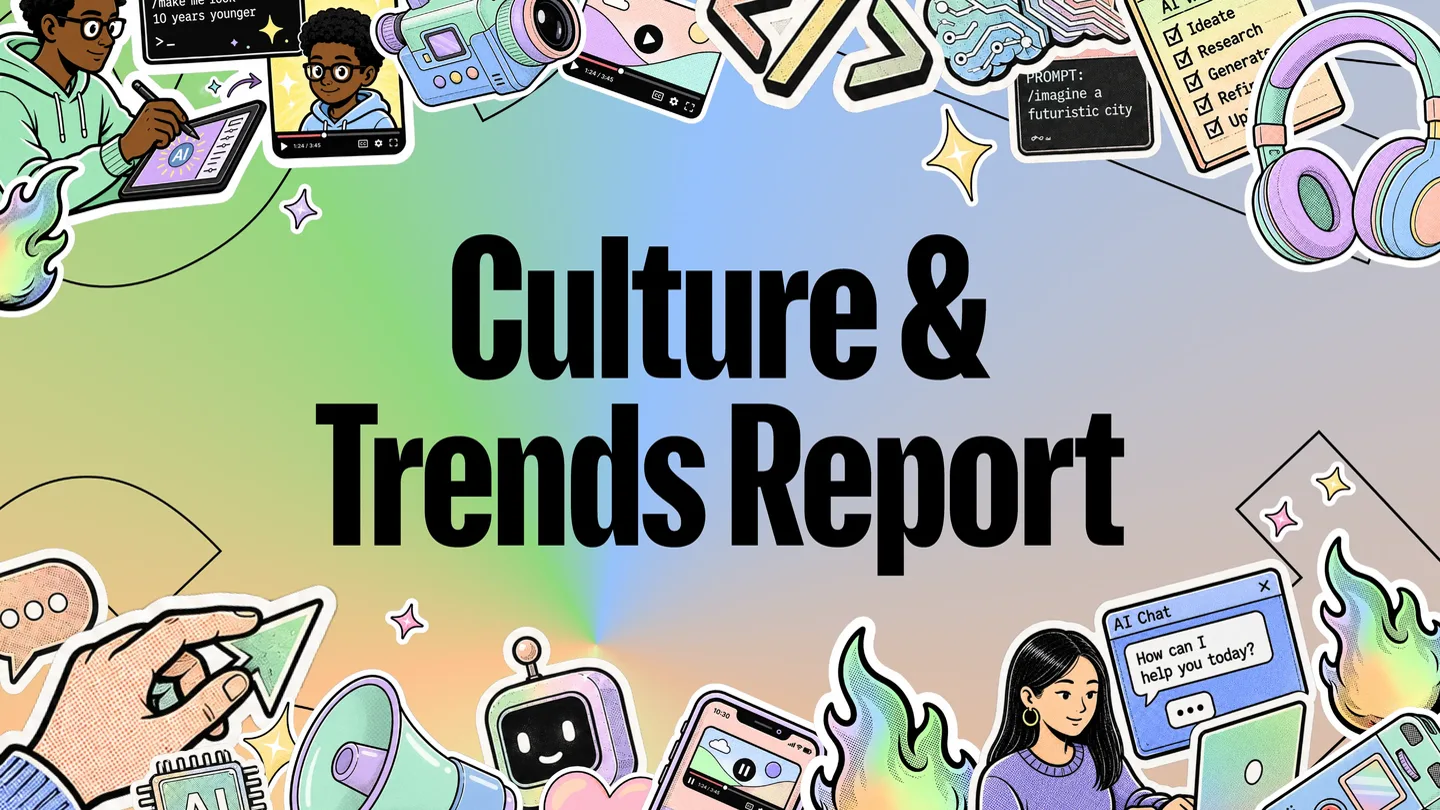
The report comes from YouTube's Culture and Trends team. The global version came out on October 20 on the YouTube blog, with data from the United States. The official page I was able to read does not include the Brazilian breakdown, so the Brazil numbers here are credited to TecMundo. The article also doesn't say when the Brazilian questionnaire was run.
Does Brazil use more AI than the United States?
On the same question, yes. In the United States, YouTube says 72% of people who post video use AI on video or images, in a sample of 694 people surveyed in April 2026 with the research firm NRG. Interest in using AI to put yourself inside the content was 61% there, versus 73% in Brazil.
That fits what has long been true in Brazil: Brazilian creators adopt new tools early. The global report uses the "hug your younger self" trend as an example, where people animate a childhood photo and appear next to it, and it is this kind of effect, with your own face, that drives usage. In June 2025, another survey commissioned by YouTube from Radius already reported 96% of Brazilian creators using generative AI, but it counted any use in the creative process, including generating ideas. The new 89% measures only images and video.
Who counts as a "creator" in this number?
Anyone who posted a video in the past year. For the US version, Tubefilter explains that the base is "video posters," people who uploaded at least one video in 12 months, not people who make a living from content. That includes the teenager who put an AI filter on a Short.
Two caveats I would keep in mind before quoting this number in a meeting with a brand. The survey was run by YouTube itself, which sells AI tools to creators (the Ask Studio assistant and automatic podcast clipping into Shorts are two recent examples). And "using AI to edit" ranges from automatic background removal to an entire generated video, which have nothing to do with each other.
What changes for you?
If nine out of ten use AI, AI alone doesn't set anyone apart. It becomes the floor, the way captions became the floor in short-form video a few years ago.
The figure I find most interesting is 63%: most people who generate video with AI put themselves in it. The audience responds to the person, not the effect. That matches what YouTube enforces in its rules:
- Label. Realistic video made or altered with AI that could pass as real must be marked as altered or synthetic content at upload (YouTube Help). A realistic avatar with your face saying something you never recorded can fall under this, as I explain in the post on the free Google Vids avatar.
- Inauthentic content. What demonetizes is not AI, it is mass-produced looking video. The faceless channel guide shows what passes and what doesn't under this rule.
If you use AI to mass-produce the same video everyone else makes, you will hit both problems at once: the algorithm, which already has plenty of that video, and the monetization policy.
What to do now
I would split AI use into two parts and treat each one differently.
- AI where the audience doesn't see it: finding the good stretch of a three-hour livestream, cutting, captioning, reframing to vertical, writing the post description. This is pure time savings, with no label and no risk. On Cut.Pro, for example, AI finds the moments in your video or livestream and hands you a captioned clip ready to schedule on social media.
- AI that shows up on screen: avatar, persona, generated scene. Use it when it does something you couldn't record, not to replace what you already record well. If you are going to use your face, build an AI persona with photos of yourself and turn on the label when the video is realistic.
- Keep what is yours: the opinion, the joke, the way you talk. That is what AI characters are already copying from real creators, and it is what keeps your followers.
The survey doesn't say how many of those 89% earn money from video, or whether using AI increased anyone's reach. Until that data shows up, I would treat AI as scissors, not as a strategy: it cuts production time, but you are still the one who decides what goes live.